


His collection brings more than 5,000 rubles a day
Muscovites are once again mastering the collection of scrap metal and secondary raw materials for rent or sale. And the point is not only in the difficult economic situation: the recyclable materials themselves, especially ferrous metal, have risen sharply in price, a ton of ordinary iron now costs more than 20 thousand rubles. And hunting for antiques also gives hunting excitement. How people start to engage in this craft and how much you can earn on it — MK found out.
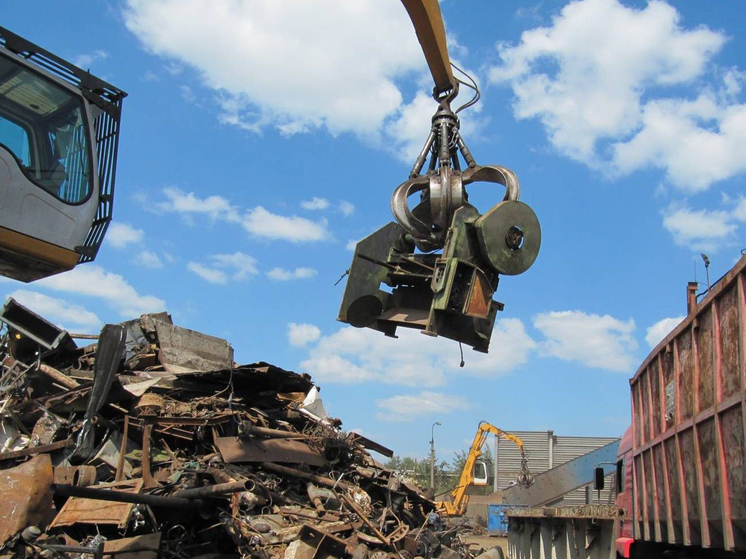 Photo: metal-dv.ru
Recall that the collection of scrap metal has long become one of the important sources of income for residents of small towns (especially those that were industrial in the Soviet era). Non-ferrous metal, of course, is valued more — therefore, the hunt for it is more active: back in the nineties of the last century, the theft of electrical cables became a real disaster in some regions.
“Our gardens under the Soviet regime were equipped with electricity, but since 1995 the wires have been stolen and not restored,” Inna, a resident of the city of Aleksina, Tula Region, who owns a 4-hundred plot with a garden house on the outskirts of this city, told MK. . — Now everyone is so used to it that no one needs light, anyway, almost no one spends the night in the garden. Therefore, they do not restore, there is no need to spend money.
At one time, it seemed that this period was left behind — but reports of such cases again appear in the news feeds. So, this summer, unknown people, recorded by surveillance cameras, managed to steal several hundred meters of cable, which is equipped with the Central Ring Road (TsKAD). The criminals have been put on the wanted list, and the government and the State Duma are already discussing the possibility of banning the delivery of scrap metal for cash — to make the procedure more transparent.
In the meantime, there are no such restrictions, prices for recyclables are breaking records: if in 2021 the standard price of a ton of ferrous metal in the Moscow region was about 13 thousand rubles (in other regions it happened even less), now the price at collection points known to the MK correspondent has risen to 22.8 thousand and continues to rise. So, pickers from the Nizhny Novgorod region fixed 23 thousand per ton in early August, and in some places the price reaches 25 thousand. By the end of the year, they predict that the price will rise to 28 thousand rubles.
Similarly with non-ferrous metals : copper in early August was valued at 680-700 rubles per kilogram, aluminum has risen in price to almost 200 rubles (prices of the Moscow region). At such prices, collecting metal — if there is a utility vehicle with a trailer — turns out to be quite profitable.
…A typical scrap metal collection point looks something like this: at first you see an unsightly poster, something like «Scrap Reception». Perhaps — with prices per ton, it's more attractive. Then the eye falls on the obligatory fence made of corrugated board: the territory of the checkpoint is a place that is private until closed.
— Bicycles? Look out! — The receptionist waves his hand somewhere in the direction of the interweaving of rusty pieces of iron, behind a pile of old-fashioned bedbacks and a bunch of gas cylinders, stoves and «bourgeois stoves» and similar rubbish. There really is a couple of two-wheeled vehicles — but, alas, children's. And one broken, bent, dented by life apparatus named “Kama” was once the dream of any teenager.
— Come at seven o'clock in the morning, our guys are just bringing iron from the “points”, — receiver, tanned to the point of obscenity, he doesn’t speak “you” in principle, and this is such a tradition of “chermet”.
But you can just wait a bit — and see the actual «guys». These tanned (or rather, hardened) ones are even more — you can’t make out the nationality in appearance, but they are also people of the southern lands. Transport — any car moving independently, if only it had a tow bar (coupling device) and a trailer. In one morning hour, one UAZ of a quite decent appearance, two rusty and shabby Zhiguli cars (which would have a place at the acceptance) and a couple of no less shabby Nexias arrived for acceptance.
Trailers are loaded over measures: refrigerators, old wheels, some kind of plumbing valves and faucets, already brown from years of exposure to the open air.
“I go to cooperatives, asking if it is necessary to take out the iron,” says Peter, the owner of the UAZ. — Some have accumulated a lot of metal debris, but it is no longer possible to take it out on their own. Who is a pensioner, who does not have a car, who is reluctant to mess around. Recently, for example, they gave away a cast-iron bath — they barely dragged it away with the retired owner.
Daily revenue, according to Peter, can reach 5-7 thousand rubles at current prices: he, according to him, does not professionally “comb” cooperatives, and his car is not “for slaughter”, but “for himself”, so trying not to overload. Nevertheless, the increase in pension (the collector is also a pensioner, only young, military) turns out to be more than this state payment itself.
— Gas cylinders are very often handed over now: they are no longer refilled, they are considered old, — says Peter . Old gas stoves and refrigerators also ask for «self-delivery» and say thank you. And there are exotic things in general: for example, a cable as thick as a hand, obviously industrial, where it came from — they are silent, they say whoever mined it is no longer in this world.
And in winter, when it is out of season in summer cottages , Peter moves, like all summer residents, home to Moscow — but he continues to work there. Only his business in the city is a little different: he combs garbage containers in the old “Stalinist” districts according to the drawn up scheme and extracts antiques and liquid items from there.
— From the latest finds — a brand new GDR coffee service from the sixties bailed out 4,000 rubles for it, — the “treasure hunter” boasts. He does not consider this work dirty — he prefers to think that he gives a second life to old things.