


Why you can’t get a fair price at forced auctions
It’s not customary to think in detail about such a mechanism as the forced sale of the debtor’s property: they say, it’s not about us. And the legislation spells out in detail almost all issues: “selling under the hammer” is regulated by the Civil Code, federal laws on bankruptcy and enforcement proceedings. Practice, however, shows that a forced sale forces the debtor to lose a significant part of the market price.
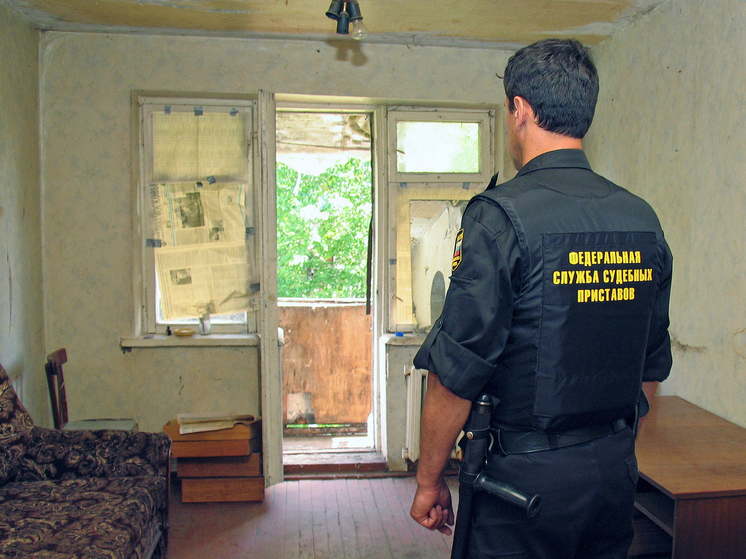
“In many cases, property is sold at auction at a price that does not correspond to the market value, — states lawyer Sergei Volosnikov. — We are talking primarily about real estate and property complexes, which require a longer sales period and more serious marketing.
Why the price turns out to be low is obvious: the sale is forced (and therefore mandatory), the period of exposure (placing an ad) is limited. And most importantly, advertisements for the sale of debtors’ property are not placed on the usual advertisement resources or in real estate databases. No, these advertisements are published in specialized publications about auctions — They are monitored almost exclusively by “professional buyers,” in other words, resellers.
“According to the Statistical Bulletin of the Unified Federal Register of Bankruptcy Information (EFRSB), it is possible to sell debtors’ property only through a public offering (third or fourth auction) with a price reduction of 60-70 percent (after it is reduced by 10 percent at repeated auctions),” — Volosnikov notes.
The debtor can do practically nothing, although according to the law he has the right to appeal the assessment and actions of the auction organizer. It's not about excesses, it's about the system — The current procedure for forced sale is designed to ensure that the debtor loses a lot of money, and resellers gain it.
This is well illustrated by the special case of native Muscovite Alexei Dorogov, the son of a legend of Moscow education — Honored Teacher of the Russian Federation, Russian language teacher, director of school No. 60 Nina Ivanovna Timonina. In 1953 she graduated from Moscow State Pedagogical Institute. Potemkina, headed this school in 1976 and became its permanent leader for decades. The level of this school (now one of the branches of school No. 1520 named after the Kaptsovs), located next to the Moscow Conservatory, is well shown by the list of its graduates: actor Alexander Lazarev Jr., press secretary of the President of Russia Dmitry Peskov… Nina Ivanovna was one of the rare school directors who was loved by both staff and parents.
So, Alexey Dorogov turned out to be a victim of just such a scheme. As a result of such a forced sale, he lost his apartment at 19 Khoroshevskoye Shosse. It all started with the fact that in the summer of 2013 he was bluntly “described” regarding the debt of 5.7 million rubles that had arisen. apartment. Thus not giving the opportunity, for example, to mortgage it and pay off. Only sale, only forward.
So, at point “A” — a person who owns a property, and at point “B” — already without her. On the way between these points — the work of an independent appraiser required by law and bidding, which takes place in several stages already described.
“At the time of assessment— September 2013 — my apartment was valued at just over 9 million rubles, — the hero of the story tells. — Knowing its area — 51.1 sq. m — and the dollar exchange rate on the valuation date, we get a price of 5510 US dollars per square meter — and this is already strange, considering that the appraisers themselves gave an average cost per square meter in similar houses of $6,440. The difference is almost 17%!'
This price was obtained, as it turned out when studying the documents, using reduction factors. “The reasons for their entry are unclear, — says the former owner of the apartment. — It would be expected, on the contrary, that we would talk about increasing coefficients. If only because the house is a housing cooperative, and such houses, as a rule, are serviced by the people living there with greater responsibility. There is a cooperative board, which additionally controls the condition and maintenance of the house. In short, such houses are usually priced slightly higher than the market — but not in my case.»
The appraiser (First Appraisal Company) also did not take into account individual factors that contribute to price increases, says Dorogov. In particular, no one visited the apartment itself, and the management of the housing cooperative did not even clarify what kind of repairs were in the apartment.
“The renovation was carried out according to European-quality renovation standards with the replacement of electrical wiring, plumbing, window and balcony frames, entrance and interior doors, low-current wiring for the Internet, alarm and intercom, — says the former owner. — Floors and tiles in common areas were completely replaced, water meters were installed, and the usual electricity meter was replaced with a three-tariff one, which, according to the appraisers themselves, should have a positive effect on the cost of the apartment.»
Instead, it seems that the average cost of an apartment with standard finishes in average condition was taken as a basis. However, here appraisers only follow “folk wisdom” any realtor: repairs, unless we are talking about an exclusive property, almost never affect the estimated value when selling a “resale” property. After all, the buyer will probably want to do everything for himself anyway. In modern times, when repairs have become sky-high, this rule has partially lost its universality — but we are still in a prosperous 2013!
After the assessment, which the owner of the property being sold, as we see, was no longer too happy with, the bidding stage began. The apartment on Khoroshevka was put up for sale in April 2014 — and not sold. “The initial listing for sale on April 28, 2014 was made in the local press, which was not particularly read by anyone— despite the fact that it was supposed to be sold via the Internet, — Alexey Dorogov comments. — After the auction did not take place, the bailiff Yazykova decided on April 30 to reduce the price by another 15%.»
One signature of the bailiff — and now the apartment’s valuation is just under 7 million 730 thousand rubles. Meanwhile, the cadastral valuation of this apartment as of the summer of 2014 was 9.6 million rubles.
«The secondary listing of real estate for sale, which took place on June 20, 2014, should have been declared illegal, — insists the former owner of the apartment. — More than 6 months have passed from the date of drawing up the assessment report to the date of the transaction or the date of submission of the public offer. According to the law, the appraisal examination had to be carried out again before putting the property up for resale.»
So, the bidding finally begins. Those who participate in such auctions know that to participate in the auction you need to make a deposit — from 10 to 50% of the minimum starting price. At the same time, the deposit for bidding on property pledged during the mortgage process is even lower — up to 5%. So, what bail was set in this case? Exactly 50% of the minimum price, that is, the absolute maximum.
“It’s unlikely that anyone will put such an amount as collateral to participate in the auction without seeing what the property being sold is, — says the former owner of the apartment. — So the situation allows us to assume that this particular apartment should have been sold as quickly as possible and at the lowest price, covering only the debt and costs associated with the sale.»
By the way, the debtor has the right to redeem his property at any stage of enforcement proceedings, repaying the debt under the writ of execution. But no one, it seemed, was going to help him with this. Quite the opposite: the bailiffs imposed a registration ban on his car as well. Of course, the money from its sale would not be enough to pay off the debt — and yet…
Let's add to this the traditional selectivity in notifying debtors: letters with fines regularly arrive at the post office with notifications in the mailbox. But notices of seizure of property (starting with the inventory of that same apartment on July 18, 2013) were so “quiet” that the debtor did not receive them.
And here we are — at point “B”: the apartment was forced to be sold “under the hammer” people who, unlike the debtor, found almost 4 million rubles for collateral. After paying off his debts, a person is left without an apartment, and everything happens in general according to the law (it is not for nothing that the courts in which the hero of the story tried to challenge what happened did not end in his favor). This is further proof that this is not about the abuses of some individual “villains.” (although the hero who lost his apartment has a number of already voiced claims against the bailiffs).
No, a special “punishment” mechanism works. debtors: began to “show off” and handle large sums of money? Give me the apartment. Like in the nineties, only with papers and stamps. Our people don’t go to the bakery by taxi, but sit quietly in their apartments, receive a salary and pay “utilities.” The initiative — punishable. Did we read the “message” correctly? If this was not meant — the system needs to be reformed.