


Soon we will face a tridemic — three viruses at once
For the coming season, experts predict a new tridemic — the simultaneous circulation of three viruses at once: covid, influenza and someone else. Last year the trio had respiratory syncytial virus (RSV), but this year the disposition may change. And although last week, according to Rospotrebnadzor, the incidence of influenza and ARVI throughout the country decreased by 4%, in a number of regions it is already on fire. In addition, the incidence of coronavirus is growing in almost all regions. Doctors advise you to take care of yourself. Meanwhile, Japanese researchers have proposed a simple and original way to avoid infection in just 5 seconds.
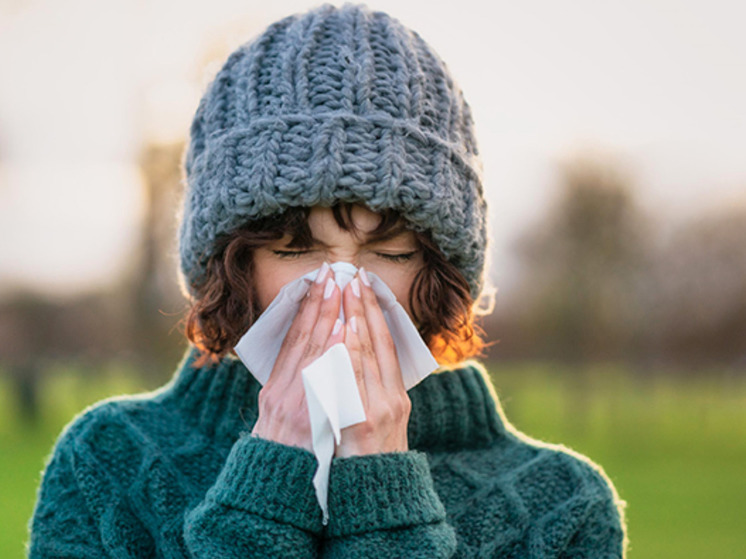 Photo: social networks
Elena Esaulenko, head of the Department of Infectious Diseases of Adults and Epidemiology at St. Petersburg State Pediatric Medical University (SPbSPMU), warned Russians about the coming tridemic. According to her, today we live in a new viral reality, due to which doctors have to come up with new tactics for treating patients. The main problem is that even the most experienced specialist cannot distinguish the symptoms of the three viruses that make up the tridemic (influenza, coronavirus, ARVI). Moreover, each of them requires completely different approaches to treatment. So, if antiviral drugs effective against ARVI do not exist in the world, then medications for influenza have been developed. Treating Covid is a completely different story altogether. Therefore, the importance of diagnosis is of particular importance.
Experts reassure that the coronavirus today is not as severe as at the beginning of the pandemic, but the new variants of Pyrrole and Eris are much more contagious than the previous ones. In addition, the coronavirus continues to claim lives every day (for example, in the last 24 hours in Moscow alone, 79 people died from it).
Well-known infectious disease specialist, Professor Nikolai Malyshev does not see anything extraordinary in the current epidemiological situation: “The tridemic has already become our reality, we experienced it last year. So far, rhinovirus infection mainly prevails and there is a little bit of everything else. There is practically no flu. The coronavirus is, of course, present, the incidence is slowly but growing.”
Meanwhile, Japanese scientists published the results of their research in the journal Nature, which will help in practice to reduce the risk of infection to zero. They took measurements to find out how long an aerosol with viral particles stays in the air after an infected person walks down the street. And it turned out that the highest concentration of viruses is present in the air in the first 5 seconds, then it decreases to insignificant values. After just 30 seconds the concentration reaches its minimum. So, if 5 seconds after an infected person there are 1516 virus particles circulating in the air, then after 10 seconds there are 133 particles, and after 30 seconds there are only 42 particles (the normal state of atmospheric air).
Comparative measurements were carried out separately in ventilated and unventilated rooms, and the conclusions were quite expected: the number of viral particles in the unventilated room remained four times greater. In addition, the number of viral particles strongly depended on… the speed of the pedestrian. The faster he moved, the less infection he left behind. If a person ran at a speed of 20 km per hour, he would leave behind several times fewer viral particles.
Well, it’s also important how close you are to the coughing or sneezing person. Scientists have calculated that the majority (90%) of viral particles scatter no further than 90 cm from his mouth, and the highest concentration is located within a radius of 60 cm.
Therefore, the conclusions are very simple: in order not to become infected, you must either switch to the other side, when someone comes towards you (after all, he may be potentially infected), either keep a meter distance from him, or hold your breath for 5 seconds.
Moreover, all this applies not only to Covid, which is most effectively transmitted through aerosols, but also to a huge number of infections in general: influenza, ARVI, monkey pox, whooping cough, tuberculosis, diphtheria, measles, etc.
“This advice is good for territories with low population density,” says infectious disease doctor Vyacheslav Popov. — It’s hard for me to imagine how you can hold your breath while walking along the sidewalk in Moscow in front of everyone you meet. And transition to the other side is impossible. Moreover, this is impossible to do in a supermarket, where the chances of transmitting the virus are much higher. Therefore, we follow the usual rules: wash our hands, wear masks, monitor hygiene, and at the first symptoms of ARVI, we stay at home.”
Professor Malyshev also agrees with his colleague: “In my opinion, this is complete nonsense. Well, how can you solve something in five seconds? People met, held their breath, and then breathed deeply into the entire surrounding space, which begins to filter this air. In densely populated areas, the recommendation is not feasible. You need to communicate less during the ARVI season; there will be more benefits.”