


People want to live in one-story houses with a mandatory dressing room
When buying countryside housing, Russians usually highlight several key criteria: location of the house, developed infrastructure, safety of the area, quality of the cottage or dacha and, of course, cost. These factors may vary depending on each buyer's personal preferences, but they are usually the main ones. VSN Group specialists systematized the main trends and placed them in places depending on the degree of influence on the suburban real estate market.
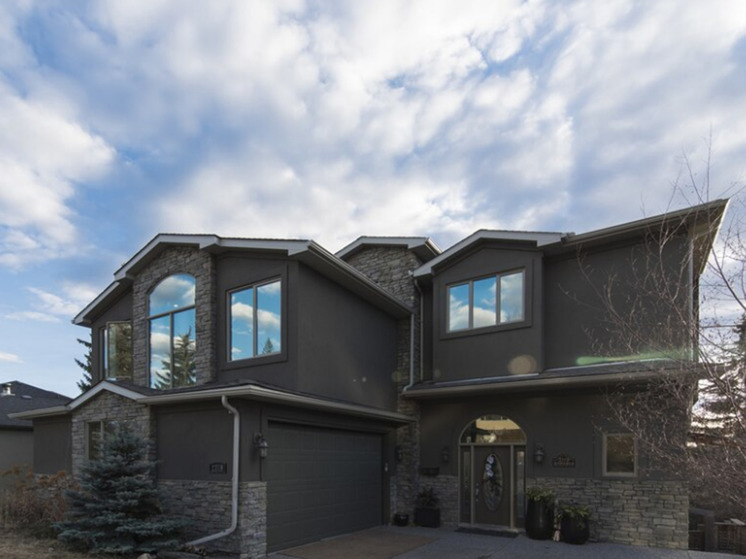
Trend number one is financial. Traditionally, the seller’s pricing policy significantly influenced the dynamics of demand, but in the last couple of years, the housing cost factor has affected demand in four directions at once.
The most affordable houses in a particular village are becoming the most in demand. At the same time, the price per square meter in them is naturally higher than the price per meter in more spacious cottages. Simply put, the smaller the housing area, the more expensive the “square.”
Against the backdrop of a redistribution of demand towards offers with a minimum “entry price” The average area of in-demand properties in the Moscow region naturally continues to decline. Now it is at the level of 110-120 square meters. Houses with an area of less than one hundred square meters usually become the most popular.
The demand for plots without a contract continues to grow — as a more affordable product compared to houses and townhouses. The impact of increased demand on this market sub-segment is so obvious that during the first half of 2024 the average price of “one hundred” in the Moscow region rose by almost 20%, while the cost of cottages decreased slightly.
The decisive factor determining the liquidity of suburban real estate was the availability of mortgages with preferential rates. More than 90% of economy class country home buyers expect to make a purchase using credit funds; in business class this figure has crossed the 80% mark. The most active in the mass segments are those buyers who can qualify for a mortgage on preferential terms.
— Experienced developers understand this trend very well and offer subsidized mortgage products. At the same time, a serious obstacle remains the maximum loan amount, which for most preferential programs does not exceed 12 million rubles, while the average cost of a cottage is close to 25 million. Loans with a down payment of 30% or more are not interesting to the mass buyer, — notes the head of the country real estate department of VSN Group Olga Magilina.
Trend number two is construction readiness. In addition to plots without a contract, the highest demand is for built houses in cottage villages. The reason is obvious: ready-made houses remove from the buyer not only the risk of unfinished construction, but also the risk of a long wait to receive the keys. The demand for finished houses is closely related to the high proportion of buyers planning to take out a mortgage. In the case of purchasing a home that is ready for immediate occupancy, the costs of finishing the interior of the home are included in the body of the loan, which removes unnecessary burden on the buyer’s budget.
Trend number three is the number of storeys, which has significantly decreased back in 2019-2020. Then, due to the entry into force of new rules for financing housing construction, the implementation of projects with townhouses became possible almost exclusively with the use of Federal Law 214, through escrow accounts. At the same time, single-family cottages were not subject to legislative changes, and developers refused to bring new volumes of townhouses to the market.
Among the projects before 2019, many houses were three-story, while in the segment of individual housing construction, houses with such number of floors already accounted for a much smaller share. Most developers limited their properties to a height of two floors.
However, between 2020 and 2023, the trend towards reducing the number of storeys continued and even accelerated, but without the existing supply affecting demand. Buyers increasingly began to show interest in one-story cottages, despite their higher price. In the first half of 2024, over 52% of potential buyers applying for the purchase of real estate for the first time clearly declare their interest in one-story houses.
Trend number four is functionality. A paradoxical trend that demonstrates, against the backdrop of a decrease in the average demanded area of both a house and the adjacent land, the buyer’s absolute unwillingness to sacrifice the functionality of the purchased housing. Just a few years ago, “losses” the area for corridors and halls could exceed 20% of the total size of the premises, and now a sought-after house with an area of 120 square meters requires four full bedrooms, a kitchen-living room of 30 square meters, two or three bathrooms and at least one dressing room.
< p>— As for popular settlements, this trend can be seen here too. When choosing offers with the minimum price, the buyer is not ready to sacrifice either transport accessibility, security, or components of the internal infrastructure of the village. The most popular options are those with central communications: electricity, gas, water supply, sewerage, and with the obligatory presence of children's and sports grounds and walking areas on the territory, sums up Olga Magilina.