

Pets Need Less Brain Power Than Their Wild Relatives
Dogs' brains are shrinking — and humans may be partly to blame, a new study warns. Domestic dogs have significantly smaller brains than their wild ancestors. They may be man's best friend, but humans are at least partly to blame for dogs' brains getting smaller.
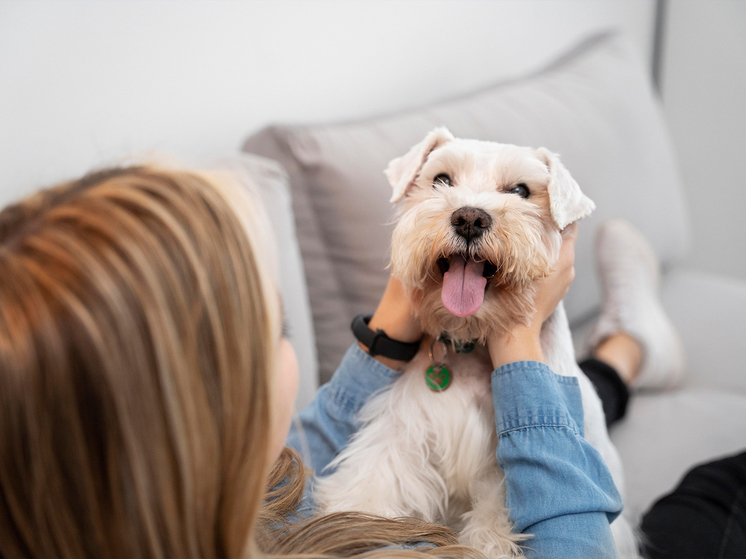 Photo: ru.freepik.com
Scientists from Hungary report that the domestic dog's brain is significantly smaller than that of its wild ancestor, the gray wolf, writes the Daily Mail.
Domestic dogs have evolved to have smaller brains because they live in simpler environments that require less brainpower than their wild counterparts.
While experts say there may be other factors driving the shrinking of domestic dogs, they do not specify what they are.
However, they say that in the wild, factors such as hibernation may contribute to the shrinking of brains in other canines.
The study was led by László Zsolt Garamszegi of the Institute of Ecology and Botany, Centre for Environmental Research in Hungary, the Daily Mail reports.
«The dog is a species of canine that was domesticated from its gray wolf ancestor at least 15,000 years ago,» the researchers said. «There are more than 400 breeds of dog today, and the general pattern is that the relative brain size of dogs is significantly reduced compared to their gray wolf ancestor.»
The theory that dogs' brains have become smaller over centuries of domestication has gained wide acceptance among veterinarians and researchers alike.
Whether it's finding food, evading predators, or finding mates, domestic dogs have to deal with less cognitive load than wild dogs.
This reduced demand for mental energy is theorized to cause the brains of domestic dogs to gradually shrink. The researchers explain: «This phenomenon is thought to be the result of reduced demand for metabolically expensive brain tissue in domestic environments.»
The researchers wanted to find out whether domestic dogs had particularly small brains relative to their body size compared to their wild counterparts. They analyzed the brain and body sizes of 25 canine species, including the domestic dog (Canis familiaris), the gray wolf (Canis lupus), and the common raccoon dog (Nyctereutes procyonoides).
The scientists found that domesticated dogs had significantly smaller brains compared to their wild ancestor, the gray wolf. But overall, domestic dogs had relatively large brains compared to some of the other species studied.
Interestingly, the study found that the common raccoon dog exhibited a «more pronounced spike» in terms of brain size reduction.
In other words, the common raccoon dog's brain is unusually small for its body size — and the researchers believe this is because it is the only one that hibernates.
Hibernation is associated with long periods of low metabolic activity and food shortages, so it likely leads to smaller brains, the scientists said.
«Long periods of food shortages, such as during hibernation, hinder the evolution of large brains due to their persistently high energy demands,» the scientists said.
The study concludes that while domestication does contribute to smaller brains in dogs, hibernation is another reason, at least for wild canines.
Domestication should not be overstated as an «exceptionally powerful evolutionary force» that is shrinking dog brains, the authors said. The study was published in the journal Biology Letters.