

Who will benefit from the third form of Russian money
The introduction of the digital ruble in Russia, apparently, creates misunderstanding not only among ordinary people, but also among employees of financial organizations. The Association of Russian Banks (ARB) sent a letter to the Central Bank with a request to clarify what, in fact, the place assigned to them in the new project. In a message to the regulator, credit institutions recalled the «extremely wary attitude towards the introduction of the digital ruble on the part of citizens.» A simple conclusion suggests itself: neither banks nor the public need this form of money, which does not have a clear concept and legal justification.
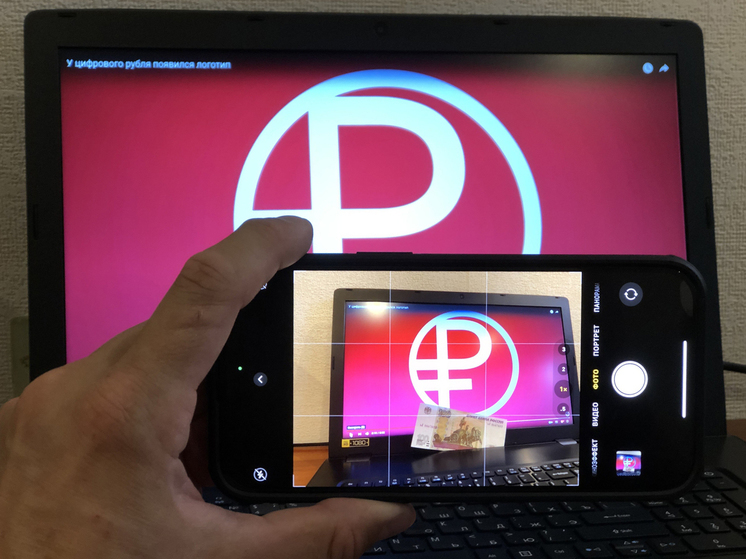
On August 1, testing of digital ruble technology began in 11 cities of Russia. The issue of crypto-rubles will be handled by the Central Bank, which will simultaneously create a platform for their storage. As conceived by the financial authorities, this will allow settlements with other countries that develop digital currencies, bypassing the SWIFT system. As for the population, as Olga Skorobogatova, First Deputy Chairman of the Central Bank, admitted, citizens will have the opportunity to “open wallets, receive digital rubles and use them on the horizon of 2025–2027.”
Banks have the most fundamental questions. For example, will they be required to become members of the platform, and what should they change in their infrastructure in that case? Or what is a digital ruble from a legal point of view? In the Civil Code of the Russian Federation, it is classified as non-cash money, and the regulator calls it «the third form of the ruble.» Obviously, the breadth of interpretation is fraught with risks for users and the lack of clear guarantees.
“If we talk about ordinary people, they treat the project with well-founded anxiety, like any non-transparent substance,” says Mikhail Belyaev, Candidate of Economic Sciences. — After all, there is no intelligible explanation from the Central Bank yet. We are brought to a specific terminology, replete with the words «experiment» or «limitations», which further obscure the picture. The people, unlike digital finance specialists, do not understand why the digital ruble cannot be used as bank loans and deposits, as well as to receive interest on such deposits.”
In addition, Belyaev argues, unregistered services are extremely common in Russia — in the form of car repairs, private lessons, renting out housing. With the introduction of the digital ruble, it will become impossible to carry out shadow transactions, since such money, “marked” in a certain way, will make it easy to identify all participants in the transaction. As for commercial banks (15 largest credit institutions of the Russian Federation are included in the pilot version of the project), it seems that they have not yet found a place in the relationship between the Central Bank and the owners of crypto wallets. Accordingly, the money (in the form of commissions for transfers) will go past the cash desks of banks, which will no longer be able to use it to buy securities or issue loans.
“The anxiety of the banks is related to the “loss of control” — after all, they will only be intermediaries in the project,” says financial analyst Fedor Sidorov. — The issuer will be the Central Bank, and digital rubles will be stored in the personal wallets of citizens on the platform of the regulator. That should reduce the cost of transactions for customers. The limit for replenishing the wallet will be 300 thousand rubles. per month, and all transactions for the population will be free, the commission for business will be only 0.3%. Naturally, banks do not want to lose their margin, and therefore, already now, some of them have begun to take an additional commission for money transfers within their own system. significant, Sidorov believes: people are used to treating everything new and incomprehensible with a grain of salt. The digital ruble is just another form of the Russian national currency, along with cash and non-cash. It will not replace anything: it will still be possible to make purchases and pay for services either with bank cards or in cash.
“It so happened that the launch of the digital ruble coincided with a period of significant depreciation of the Russian currency against the dollar and the euro ( by 40% since the beginning of the year,” notes Andrey Loboda, economist and director of communications at BitRiver. — Such a negative background is unlikely to promote the project. A year ago, when the dollar was worth barely more than 50, the degree of demand for digital currency by society, its strengths, was an order of magnitude higher. Before the introduction of an innovation of this level, it would be nice for the ruble to go through the path of a stable exchange rate life for several years.