


And the locals are praying that the refrigerator does not fail: new appliances have become unavailable
«We will prevent the excessive rise in prices of goods on the shelves, we will bring inflation under control as soon as possible», Recep Tayyip Erdogan promised before the presidential elections. A couple of months later, the lira broke a record fall against the dollar. And Türkiye has entered the top five most expensive destinations for tourists. A special correspondent of MK saw how life in Istanbul has changed after Erdogan's victory, and local residents shared their troubles.
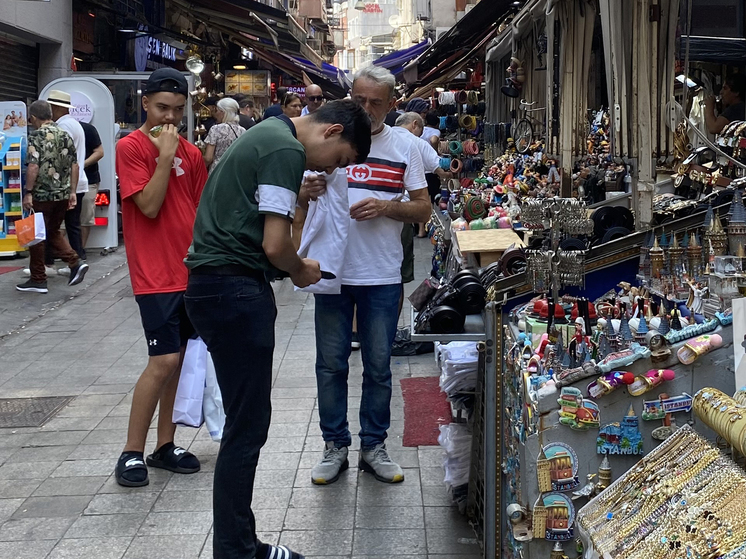 < span class="article__picture-author" itemprop="author">Photo: Irina Bobrova
I stayed in Istanbul for two days. And immediately went to the people with a survey: “How do you like life after the elections?”
“Prices are unaffordable, inflation is rising, wages are not being raised,” lamented a salesman at a shawarma shop in central Istanbul. “I work around the clock, but there is not enough money for anything,” the restaurant waiter sighed. “We have never lived so badly,” the taxi driver muttered. “We have tightened our belts, we are preparing for the worst,” summed up the hotel employee.
But you can’t argue.
If last year Istanbul was considered an affordable destination for the middle class, today this city is more likely for rich people.
But first things first.
I have been coming to Istanbul for the last five years. In all the years, I don’t remember that a taxi was considered a luxury for the average tourist. Two years ago, we allowed ourselves to ride a business class taxi without much damage to the wallet. True, last year they took the crown off their heads — they moved to a regular car. Prices seemed much lower than in Moscow.
This year we used taxi services twice. Both times the cost of travel went off scale.
A taxi from the airport cost us 600 lira (2150 rubles). We drove for about half an hour. The counter for the second trip showed 360 liras (1280 rubles) in 20 minutes.
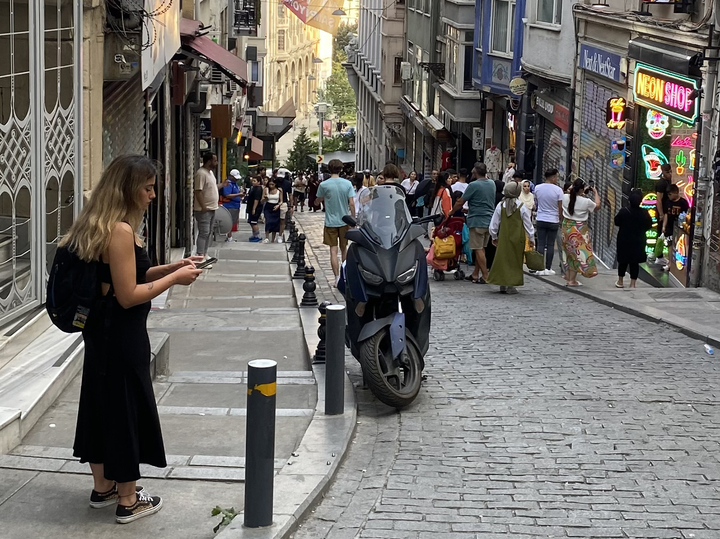
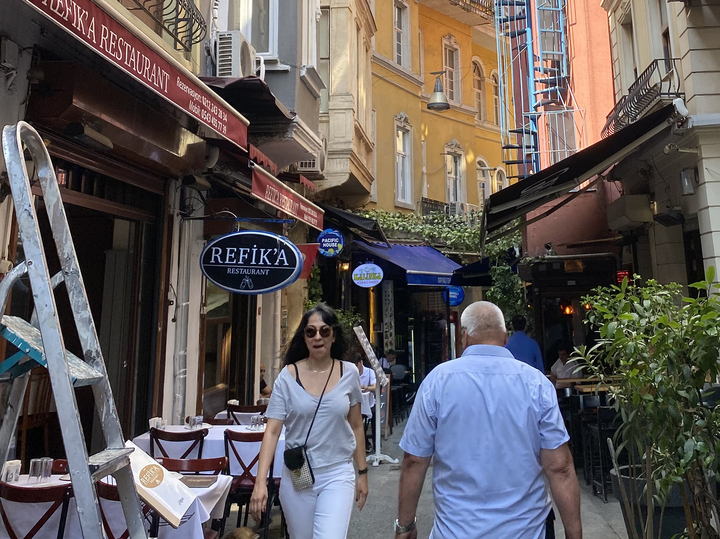
Our hotel was located in the area of the famous Istiklal pedestrian street in the center of Istanbul, a stone's throw from the Russian embassy. We chose the most budget option in this quarter. Before the presidential election, a double room cost $130 (12,320 rubles) for two nights. After the election, the price soared to 160 (15,160 rubles). Now it's already 200 dollars (18,900 rubles).
The room was a pencil case, where they miraculously shoved a double bed and a nightstand under the TV. The bathroom was like a narrow closet: a tiny sink, a shower over the toilet. After taking a shower, the entire space was filled with water.
On the second day of our stay, the water in the hotel was turned off.
—The accident happened in the entire area, we are fixing it,” the woman at the reception said indifferently. — Be patient, people have already got used to it.
Cold water was turned on closer to the night. I had to use the toilet in the neighboring cafes.
Well, anyway, Istanbul is not about hotels and taxis, but about the atmosphere. There are no changes here. The city is beautiful, which cannot be said about the prices of products, which, according to my feelings, have risen three times in a year.
For example, a modest Turkish breakfast by local standards (two scrambled eggs, olives, olives, butter, jam, honey, vegetable caviar, a small plate of tomatoes and cucumbers) in a cafe cost almost 500 liras (1,800 rubles). In addition to this set, we ordered a scramble, an omelet, pancakes and three coffees for three. We paid 6000 rubles.

We decided to save some money on lunch. We have been looking for a restaurant with reasonable prices for a long time. Found. We ate tasteless, but cheap by Istanbul standards. The check came out 5,000 rubles for three.
But it was not possible to dine on a budget. Eight thousand rubles were left in the simplest beer bar in the alleys of Taksim Square. This bill was given to us for two pizzas, a couple of beers and an alcoholic cocktail.
The long-awaited Zara shopping trip was also disappointing. Previously, the prices for the Spanish brand in Turkey were 30 percent lower than worldwide. Now the cost of things caught up with European ones. For jeans and two pairs of summer shoes from the new collection, I gave 15 thousand rubles. Sale items were not much cheaper.
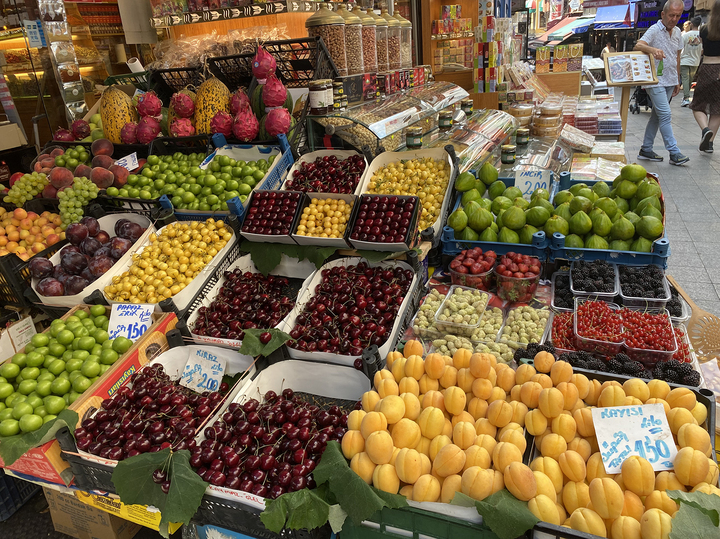
The cost of fruit at the breakup was also surprising. Cherry — 200 lira (720 rubles), peaches — 120 lira (430 rubles), apricots — 150 lira (540 rubles).
As a result, we left about 70 thousand rubles in Turkey in two days.
And I wondered how the Russians who settled in Istanbul for a long time live in this city.
Olga arrived in Istanbul in 2009. At that time, the woman was pleasantly surprised by the standard of living: “It's sad, but today's Turkey cannot be compared with the past. Today I want to run away from here without looking back.
— Inflation is going by leaps and bounds and does not think to stop. Almost every six months we are promised to stop it. Surprisingly, life is getting worse, but people trust the TV, not the refrigerator, says the interlocutor. The latest elections are proof of that.
According to Olga, many Turks and foreigners with residence permits leave Istanbul. Those who have the opportunity go to America. Those who do not have money move from large Turkish cities to small ones, since prices in Istanbul are unaffordable.
— The official minimum wage is 11,400 liras (40,800 rubles). If a person has proven himself, they can raise up to 15,000 (53,700 rubles). Pension — 7,500 lira (26,850 rubles). And the cost of renting apartments in Istanbul starts from 10,000 liras (35,800 rubles), the woman adds. — It is not easy for families where only the husband works, and the wife is on maternity leave. It is not an option for a young mother to go to work, you will have to hire a nanny to whom you will give all the minimum wage.
There are few state gardens, they do not function all day. Private schools and kindergartens raised prices, all my friends took their children from there. They do not understand how they will get out further.
Because of the rise in prices for utilities, the Turks began to save money. Olga believes that this winter people would rather be cold than spend money on heating: “We turn on the batteries at home ourselves, so we can control the consumption.”
The woman switches to personal problems: “Our vacuum cleaner broke down, but there is no money for a new one. I pray that the refrigerator we bought 12 years ago doesn't fail. Imagine what desires people have: God forbid, equipment breaks down… Because buying a new one is unrealistic, the income is only enough for rent and food.
We forgot what new clothes are. I noticed that people began to dress in the market. Previously, we considered LC Waikiki to be a budget and high-quality store. It’s better not to go there now.”
— According to statistics, children began to suffer even more obesity and anemia. Since parents cannot afford to buy meat, fish, children began to eat even more bread and pasta, Olga continues. — We don’t go to restaurants and cafes, although we used to go somewhere for breakfast on weekends. People are embarrassed to share food delights in social networks. They understand: this is not the time for boasting when chicken has become a delicacy for people. Gasoline is getting more expensive every week, and the price tags are updated in stores almost daily.
Nevertheless, the restaurants of Istanbul are packed to capacity, in clothing stores there are queues at the checkouts.
— I also see that people are sitting in restaurants, drinking coffee. They chat as before, as if nothing has changed. I don’t understand, says the interlocutor. The gap between rich and poor is widening. Previously, there was a very strong middle class in Istanbul, I considered myself one of them. Now this class is almost gone. There are either the super-rich or the rapidly impoverished. Those who have something to sit on sit in the cafe…
Russian émigrés, who are paid in rubles, can still afford this way of life. But ordinary Turks are not even able to take a normal vacation. Previously, all neighbors, friends went to local five-star hotels or to Europe. This year, many could not even afford a beach an hour's drive from Istanbul.
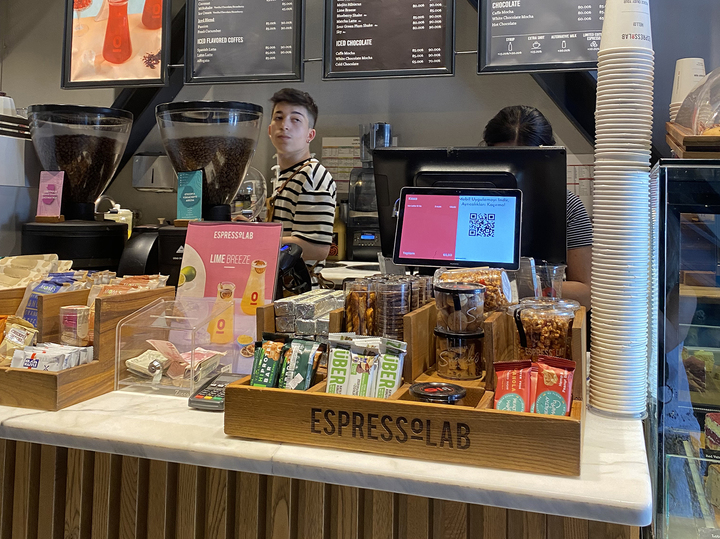
There are no cheap places left in the city. Except social cafes on the outskirts of the city, they are called Sosyal tesisleri. But even there, the Turks can only drink cheap tea. Although earlier tea was a free treat in any restaurant. Now they take money for it. This is nonsense for the country. All Türkiye is very expensive, not only Istanbul.
I also sympathize with tourists. The Turks know that now you can only cash in on them. Therefore, the prices for visitors are unreasonably high.
Olga herself is worried about her apartment: “I have been renting an apartment in a good residential complex far from the center for a long time. Lucky with the owner, he asks for an adequate price for housing. But I'm waiting with great fear of winter, I can imagine what time the communal apartment will rise. Will I be able to live there? If not, where do you go? In fact, I try not to dwell on the bad. I remember the hungry nineties. Now I want to cry. Are we really returning to that time again?..”
Recently, the Turkish media have been discussing the topic that Istanbul is about to be covered by a powerful earthquake. The dates are given as mid-August. Olga treats such forecasts philosophically: “People are so tired of problems that they think: whatever happens, they don’t give a damn.”
Istanbul resident Irina is a pensioner. She works and receives a pension for her late husband. There is a provision in Turkish law, according to which the wife receives his pension after the death of her husband.
— I have a worthy profession, I earn extra money. Other pensioners I know, educated people, also have additional income. Someone works or receives funds from the rental of real estate or other property, the woman says. “Everyone from my circle continues to go on vacation, both inside Turkey and abroad. But these people stand firmly on their feet, have their own homes.
Yes, prices are rising, but so is the minimum wage. Since January 2023, it has increased from 5,500 (19,600 rubles) to 11,400 lira (40,500 rubles).
Prices have increased mainly for products. For example, two years ago a pound of cottage cheese cost 3.95 (14 rubles) liras, now it costs 24.5 liras (89 rubles). For clothing, footwear and manufactured goods, the increase in prices was not so sharp. And for utilities — it’s completely unnoticeable. For example, two years ago I received an electricity bill for about 105 liras (380 rubles). For July I received a receipt of 167 lire (600 rubles).
I bought what I needed, and continue. Perhaps, large families, pensioners, people without education and profession suffered. The problem is that the illiterate and low-income part of the population mindlessly gives birth to a bunch of children whom their parents cannot educate. Hence the misfortune.
In my house, a 35-year-old woman washed the stairs. One day I watch her squirming. I looked and she was pregnant. She asked what number the child was. Turned out to be the sixth. Two months later, she was already washing the entrance with a baby tied on her shoulders. In May, I again saw her cleaning the entrance with a baby tied behind her back, a two-year-old child was running nearby. And what do you think: now another one is waiting. I asked: how does she work in this position? She answered: my husband can’t stop playing cards, I’ll have to earn money myself …
Zhanna has been living in Istanbul for many years, teaching music: “I raised prices for my services, and many refused to study. Previously, children were enrolled in sports, chess and music, but now they choose one thing.”
When I asked how the Turks reacted to Erdogan’s election promises, which he did not keep, he answers: “If they chose someone, but life has become worse, they will be silent and endure.
— Now the crisis is all over the world, but Türkiye has distinguished itself especially. This country will no longer be available. Gasoline rose from 24 (85 rubles) to 36 liras (128 rubles), last year it cost 7 liras (25 rubles). There are no new cars in car dealerships, registration for them is a year in advance. People realized that it was unrealistic to buy apartments, they decided to invest at least in cars, Zhanna continues. — At resorts in 3-4-star hotels that work on an all-inclusive basis, they began to save on food and alcohol.
I heard complaints about bad alcohol, they also said that not everyone was given meat and fish day. But tourists still go. For foreigners, this is still a paradise. Change the dollar-euro and go for a walk.
Natives of the CIS countries also come. They say Türkiye is better than Egypt. My friends from Moscow began to travel a lot around Russia, but nevertheless they are going to Turkey.
We began to choose rest by car with stops in inexpensive boarding houses. We spent 14,000 lira (50,000 rubles) for two with a friend for a week instead of 60,000 (214,000 rubles), which we could have left for an all-inclusive hotel.
Sofia moved to Istanbul a few years ago. He calls the situation with prices catastrophic: “We cannot buy many products: fish, beef – from the dream area. Medicines have risen in price by a third. We noticed that the global price increase is on weekends, so we buy food on Fridays.
Last year, a weekly supply of food at the bazaar went for 700 lira (2,500 rubles), now it is 3,000 (11,000 rubles). My neighbor has a pension of 7,500 rubles (26,700 rubles), with this money she eats beans and noodles.
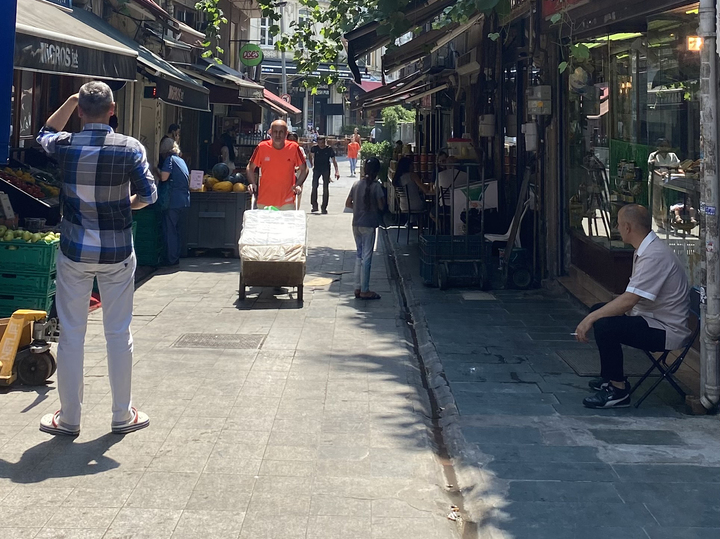
Another Istanbul resident summed up the above: “There was inflation before, but now picked up a crazy pace. You can't make ends meet on the minimum wage or pension. People save money on everything. Fuel, electricity, gas, groceries—everything is getting more expensive. We do not have time to keep track of new prices.
Earlier, people did not think about how much food and essentials cost, but now people count every penny. I know Turks who cannot afford not only meat, but also dairy products, someone cannot go to relatives, they only dream of buying a computer. The quality of life has changed for everyone. While we were talking, news came that public transport tariffs were raised by 51.5 percent…”