


The use of the “third form of money” will make shop checks of citizens transparent
From August 15, real transactions with the digital ruble will begin in Russia. This was announced at a press conference by the first deputy chairman of the Central Bank Olga Skorobogatova. This half of the year, 13 banks are participating in the test, which have already tested the preparatory measures, and another 16 financial institutions are ready to join the process in 2024. What will the widespread use of the “third form of money” by Russians lead to, MK found out from experts.
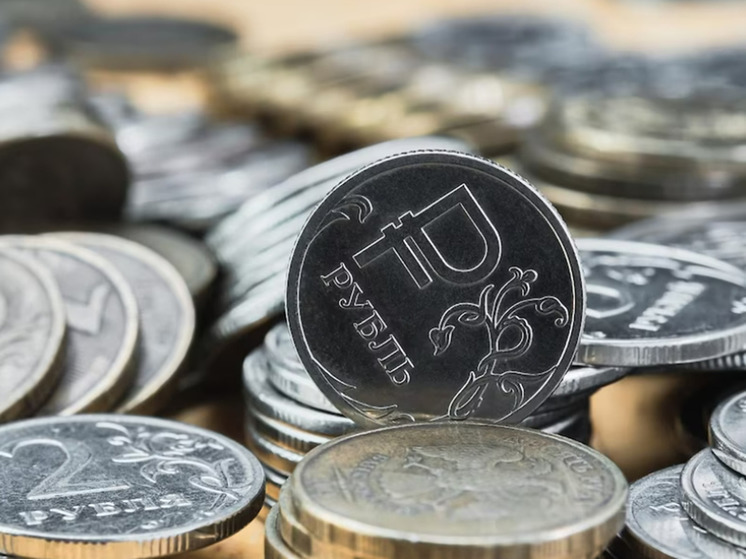
According to the law, it will be possible to carry out transactions with the digital ruble, which is also commonly called the “third form of money” (after cash and non-cash options), through a special information system operated by the Bank of Russia. He must also determine the tariffs and terms in which banks must provide customers with the opportunity to use the «digit». For ordinary citizens, the use of the digital ruble will be free, and a commission of 0.3% of the payment amount will be charged from businesses. “This is lower than the current rates in another public service — SBP, where today they range from 0.4% to 0.7%,” says Sofya Glavina, head of the Digital Economy program at RUDN Institute of Economics and Economics.
In other words, we are talking about the loss of part of their profits by financial institutions. According to the head of InDeFi Smart Bank Sergey Mendeleev, it will be such a “SBP-2”, but without commercial banks, which, of course, will eventually deprive many of them of income from transfers, but more importantly, profits from acquiring, because the declared by the Central Bank tariffs are approximately an order of magnitude lower than the current ones for processing credit cards. It will be beneficial for a merchant to accept digital rubles via a QR code instead of credit cards via a POS terminal. Another question is that in this case all payments will be absolutely transparent for the state and the tax authorities, and they will have to pay all the due deductions.
This, by the way, is often cited as an additional advantage, since, according to some experts, the introduction of a “third form of money” will make it impossible to use corruption schemes, for example, in public procurement. “This innovation will contribute to the fight against money laundering and tax evasion,” said Maxim Osadchiy, head of the analytical department of BKF Bank.
However, specialized IT specialists are skeptical: in order to combat technologies alone are not enough to cause illegal actions, the motivation of people is important here. “As for the mechanisms for combating corruption in public procurement and other things, then, of course, no digital ruble will help here, even talking about this topic is ridiculous,” Mendeleev warns.
The loss of income from transfers by banks causes fair concerns among citizens. Now credit organizations will try to start earning in a different way. “This may mean, for example, for customers a possible increase in rates and tariffs for other banking services, the absence of discounts, refund benefits, as is customary when using cards,” notes financial analyst Mark Goykhman. Here you can also point out the disadvantages of using the digital ruble for customers. Since this “third form of money” is intended solely for settlements, no interest is charged on funds in wallets, cashback, it is impossible to issue and receive bank loans in digital rubles, which will be a deterrent factor for Russians who are accustomed to using credit cards and various installments.
However, according to the regulator, the digital ruble will allow citizens to more effectively manage their spending through technology that automates payments. The Bank of Russia provided for the creation of simple templates for digital rubles, which can be used to pay, for example, housing and communal services.
“The client will choose whether he wants to use this template for some of his operations or not, this is solely the choice of the person,” Skorobogatova explained. “We will start with very simple templates: payment for a communal apartment, payment of some periodic payments to a person.” And then the Central Bank, together with banks, will consider expanding this list of templates. Legal entities will have a similar opportunity — for example, companies will be able to set up digital rubles in such a way that they are sent to pay salaries.
Total transparency for the state of spending citizens in digital rubles has already given rise to «conspiracy» rumors in social networks. Citizens point out that in China, where the regulator has also launched a digital yuan, a “social score” has long been used. And isn't the introduction of the digital ruble the first step in this direction? Imagine: a citizen received a salary, and instead of paying a fine or a tax, he went and bought himself alcohol for the same amount. How will the “all-seeing” regulator look at such expenses? The secret of personal life will disappear, and the Bank of Russia will become such a financial analogue of the “Big Brother”, who watches over everyone. Experts disagreed on this score. Some argue that everything will be carried out within the framework of existing regulations. “Information about wallets, digital rubles stored on them, transactions and settlements will constitute a bank secret protected by law,” Glavina emphasizes. The second group of analysts points out that citizens have been living with Big Brother for a long time, so nothing new will happen.
“We have long been surrounded by all sorts of ratings, the very first of which is your school certificate,” says Igor Drobyshev, technical director of DC Engineering. — Banks assign you a solvency rating on a loan, on which the rate depends; insurance — the rating of the state of health, on which the insurance premium depends; and the rating for politeness, accuracy and tact is generally assigned by taxi drivers. Traffic police officers evaluate your “trust rating” by the number of unpaid fines, and car sharing services automatically change the rental price depending on your driving style. Why is this set of data not a “social rating”? Technology is just a tool, and if desired, social rating could have been implemented for a long time on the basis of tools that were available ten years ago, the expert noted.
information for the regulator, and its possible leaks. So, according to Mendeleev, all the arguments about the introduction of “social ratings” and other “Big Brother” scarecrows are written with a pitchfork in the water, but the institution of all payments by Russian citizens in a single information processing center with the corresponding probabilities of leaks and hacks of infrastructure is a really urgent problem. , which is still unknown how it will be solved.