

Researchers' progress raises ethical controversy
Still one of the biggest mysteries in science: how a human cell—too small to be seen with the naked eye—divides and multiplies, to eventually transform into a human body consisting of more than 30 trillion cells?
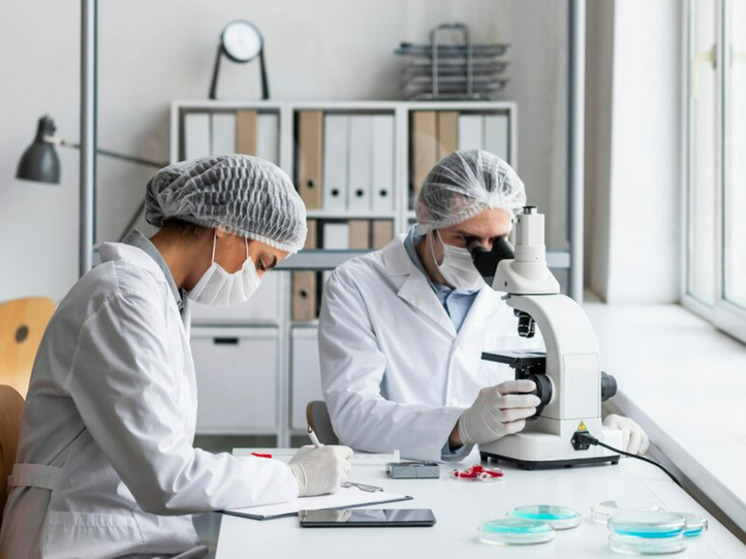
From the moment the sperm merges with the egg, the development of the human embryo involves a number of complex and poorly understood processes. Much of what is known about embryo development comes from animals such as mice, rabbits, chickens and frogs, but research on human embryos is very tightly controlled and regulated in most countries, CNN says.
But animal studies can only tell researchers so much. What happens during the development of a human embryo, especially in the crucial first month, remains largely unknown.
“The drama happens in the first month, but the remaining eight months of pregnancy are mostly about rapid growth,” says Jacob Hanna, professor of stem cell biology and embryology at the Weizmann Institute of Science in Israel. – But that first month is still very much a black box.
Being able to peer into that black box could open up a world of biomedical possibilities, allowing scientists to uncover previously obscure aspects of embryonic development that could ultimately lead to better things. understanding miscarriages, birth defects, and side effects of medications taken during pregnancy. And some researchers believe they have found a way to do this that bypasses the need for eggs or sperm, CNN reports.
Using advances in stem cell technology, laboratories around the world are creating embryonic-like structures — a group of cells that acts like an embryo but cannot grow into a fetus.
Recent breakthroughs in this field, the culmination of years of painstaking laboratory work, have generated hope and some concern, raising pressing questions about the ethical status of these models, the extent to which they should be treated as human embryos, and whether they are open to misuse.
The embryo-like structures are essentially clumps of lab-grown cells that are smaller than a grain of rice and represent the earliest stages of human development, before any organs have formed. They do not have a beating heart or brain.
The most advanced models, presented in September by an Israeli team of which Professor Hanna was part, show all the cell types that are necessary for embryo development — the placenta, yolk sac, chorionic sac (outer membrane) and other tissues needed by the embryo to develop.
These structures were left to develop for eight days, reaching a stage of development equivalent to the 14th day of a human embryo in the womb , — important moment when natural embryos acquire internal structures that allow them to move on to the next stage: the development of the precursors of body organs.
Khanna said these were the most accurate models developed so far, and, unlike models created by other teams, no genetic modifications were made to include the genes needed to create different types of cells, just chemical nudges.
Hannah's team did not use fertilized eggs. They started with human cells known as pluripotent stem cells, which can potentially be programmed into many cell types and are widely used in biomedical research. Some of them were derived from adult human skin cells.
The team then reprogrammed these cells into what they call a “naïve state,” corresponding to the seventh day of development in a natural human embryo, around the time it implanted in the uterus. These “naive” the cells were divided into three groups.
One group, destined to become embryos, was left untouched. The other two groups were “pushed” using certain chemicals that activate certain genes to develop tissues needed to support the embryo, such as the placenta. According to Hannah, after two days, all three groups come together.
“In the first three days, you don't see much, you just see a clump of cells that are growing, he explained. — But by the fourth day you start to see… it has a structure, you can see where the embryo will form.
At the equivalent stage of the seventh day, the synthetic models of human embryos were clumps of about 120 cells, collectively measuring about 0.01 millimeters across. By day 14 they contained about 2500 cells and were 0.5 millimeters in size.
Hanna and his team say the models closely mimic how an early embryo acquires all the structures it needs to begin developing into a fetus. The internal organization matched images in embryological atlases released in the 1960s, and when they applied cell secretions to a commercial pregnancy test, the result was positive.
However, only 1% of the aggregated cells self-organized into a structure similar to embryo. For embryo models to become a useful tool for scientists, a much higher percentage would be needed, Hannah said, which is possible but would likely take years to perfect.
“I think we can learn a lot from these stem cell-based embryo models. At the moment there are some disadvantages. They are very inefficient to manufacture… so clearly efficiency needs to be improved to really get the most out of what we can get out of these models,” Peter Rugg-Gunn said at a press briefing this week. Rugg-Gunn is a team leader and head of public engagement at the Babraham Institute, which specializes in life sciences research.
To date, no embryo models have been grown for longer than 14 days, mostly from -for the limitations and problems associated with the cultivation of these structures.
However, 14 days is an important milestone because that is when approved laboratory testing of cultured human embryos typically ends. The line was set by the UK Fertilization and Embryology Act in 1990 in the wake of public concern about test tube babies before in vitro fertilization was widely accepted, and concerns that scientists were ignoring the special moral status of human embryos. The 14-day rule was subsequently adopted by several other countries and eventually became an internationally accepted ethical limit.
This restriction, which some scientists want to expand, does not apply to stem cell-based embryo models, which the International Society for Stem Cell Research says should not be considered embryos. However, the organization recommended that research using models require ethical oversight.
Perhaps in the future these models could be used to study human development well beyond the 14-day period. Hanna and other groups have grown mouse embryo models to a later equivalent stage. He said that in the future it may be possible to extend lifespan in human embryo models to 40 days.
But the grim fears that scientists studying the models are trying to create an alternative way to produce human life are the stuff of science fiction , says Hannah.
“People immediately think that we are trying to replace pregnancy or gestation with this embryo model, but in fact that is not the case, not only is that not the goal, but I don’t think that “will it ever be possible,” he said.
According to current research, embryo models are still in their infancy, with clear scientific differences from the human embryo and no potential to form a fetus.
In addition, the International Society for Stem Cell Research, in its guidelines, prohibits the transfer of any models of an embryo into the uterus of a person or animal.
“I want to emphasize that these models are not embryos, and every jurisdiction and society… those who have studied it have said that attempting to transplant any stem cell-based embryo into a woman or a human embryo into the uterus of an animal should be illegal. “It should be banned,” says Robin Lovell-Badge, professor and head of the Laboratory of Stem Cell Biology and Developmental Genetics at the Francis Crick Institute in London.
Many scientists argue that human embryo models, especially if they can be produced in large quantities, offer an ethical alternative to research on rare and valuable human embryos that are typically obtained as a byproduct of IVF.
“With their stem cell base, we can scale everything up. We can conduct experiments on them that we cannot do on precious, rare (human) embryos. And so it just changes the types of experiments we can do and the questions we can answer,” said Naomi Maurice, group leader at the Developmental Models Laboratory at the Francis Crick Institute in London.
One potential Applications may include drug screening and research. Pregnant women were often excluded from drug trials due to concerns about the safety of the parents and the unborn child.
In her laboratory, Naomi Maurice has conducted experiments with embryonic models to see how they respond to drugs such as thalidomide, a drug once marketed as a treatment for morning sickness, which is already known to cause birth defects.
The goal was to find out «whether they are sensitive to these drugs that we know will be toxic to the early embryo, and then whether we can use (the embryo model) to screen for the drugs that we know don't really know?,” she said.
Maurice agreed that the models should not be classified as embryos given their origin from stem cells and because they still lack certain characteristics, however she noted that it was impossible to know for sure.
“We can't do the golden experiment, which would be to put it in the womb and see if it can continue to grow, and without being able conduct this experiment — absolutely fair — How can we, as researchers, decide whether we have crossed this boundary and become what we would call an embryo? I think this is a big question. And this is not an easy question to answer,” admits Maurice.