


How much will payments increase, who will they affect and how will this affect the country’s economy
Speaking at the St. Petersburg International Economic Forum, President Putin promised to resume indexation of pensions for working pensioners from February 1, 2025. The statement of the head of state was met with prolonged applause from the audience, which is understandable, because the country has been waiting for a solution to the issue since 2016. What do the authorities want to achieve with this step, who will it affect and how will it affect the Russian economy — in the material of MK.
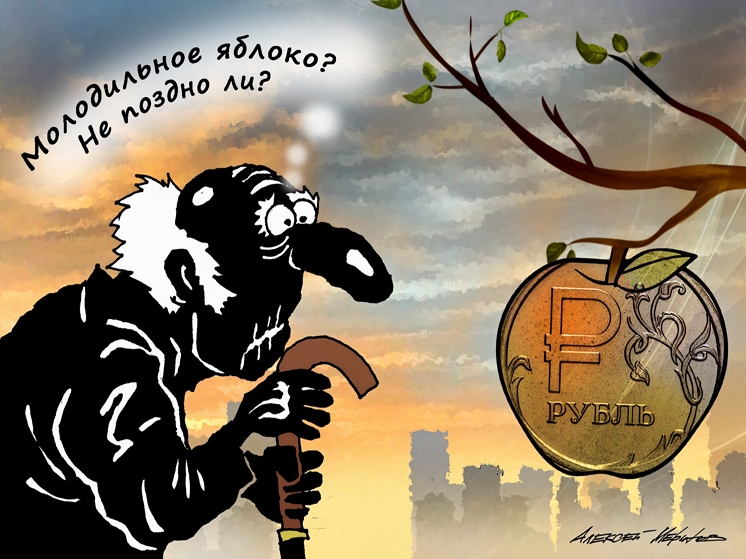
The decision to stop indexing pensions for working pensioners eight years ago was made in accordance with the law signed by Putin in December 2015. At that time, the state treasury was under pressure due to the decline in oil prices, the country's GDP was declining, and a decision was made for those who were already receiving salaries not to index their pensions. As Dmitry Medvedev, who served as Prime Minister of the Russian Federation at that time, noted, if people find the strength to work, then they “don’t need the small amounts” that indexation provides.
In subsequent years, in the State Duma and the Federation Council, both entire factions and individual parliamentarians repeatedly raised the issue of the need to index pensions for working pensioners in accordance with the principles specified in the Constitution of the Russian Federation. However, the government’s answer has always been negative: the sources of funding for the initiative are not indicated. And at SPIEF 2024, unexpectedly for everyone, the president drew a line under the controversial issue. “I propose to resume the indexation of pensions for working pensioners starting next year,” said Vladimir Putin. “From February 1, 2025 onwards, pensions will be increased annually not only for those who have already retired, but also for those who continue to work.” The head of state asked the deputies, together with the government, to adopt a corresponding bill during the current session of the State Duma.
According to Deputy Prime Minister of the Russian Federation Tatyana Golikova, as of April 1 of this year there were 7.8 million working pensioners in Russia. To index pensions, they will need at least 100 billion rubles, she said at SPIEF 2024. For comparison, at the beginning of last year there were 7.91 million working pensioners in Russia, but then their number dropped to 7.55 million. According to Alexander Safonov, a professor at the Government Financial University, such fluctuations were caused by the so-called “salary maneuver” — a strategy , when working pensioners quit, receive a recalculation of their pension taking into account the missed indexations, and then find employment again, but often in the “gray zone”, having agreed with the employer to receive “salaries in envelopes”. The expert claims that such behavior became widespread last year.
The average pension for working pensioners in our country, according to data for April, was 17.48 thousand rubles. This is more than 4 thousand rubles. less than the average for non-workers (21.75 thousand rubles). So it is not surprising that dismissal for the sake of recalculating pensions and returning to the labor market in the “gray zone” became an easy way for working pensioners to circumvent the law that did not allow them to index their pensions. At the same time, according to Safonov, indexation for working pensioners has never been a burden for the budget. Budget system revenues received from the personal income tax of a working pensioner and insurance contributions to the Compulsory Medical Insurance Fund and the Social Fund, which are paid by his employer, significantly exceed the costs of pension indexation.
According to Igor Nikolaev, chief researcher at the Institute of Economics of the Russian Academy of Sciences, the decision to resume indexation of pensions for workers starting next year was influenced by the latest tax changes — the introduction of a progressive personal income tax scale and an increase in income tax. Both innovations will start working in 2025. This is a serious increase in the revenue base of the state treasury, which makes it possible to take certain steps in the field of expanding social benefits.
Another important factor that predetermined the authorities’ decision was labor market problems. “Now in Russia the unemployment rate is at a historically low level — in April it was 2.6%,” the expert emphasized. “There is an acute shortage of personnel, which probably played an important role in the authorities’ decision to index workers’ pensions.” Such a step is a serious incentive for them to remain in their jobs, which will significantly mitigate the situation on the labor market. “It is worth recalling that the shortage of personnel has become a significant driver of wage growth since the beginning of this year: in the first quarter of 2024, they grew by 12.2% year-on-year,” recalls BitRiver Communications Director, economist Andrei Loboda. “The indexation of salaries of working pensioners was postponed for many years, the price of the issue does not exceed 100 billion rubles, this amount will not affect the acceleration of inflation, and against the backdrop of an increase in the quality of life and domestic consumption, the social effect will be very positive.”
< p>This decision will also have a positive impact on the country’s economy, because consumer demand will actually be stimulated, which fits into the strategic line that the authorities are trying to follow to maintain economic growth. The additional income received by pensioners will be spent within the country. True, at the same time, the “extra” money will also accelerate inflation, which the monetary authorities are unable to curb. But, judging by the decision on indexation, the government relied on economic growth, Nikolaev summed up.