


Economist: “By the end of the year, the rate should reach 100 per dollar”
The Ministry of Finance made it clear that the current ruble exchange rate does not suit it: a weaker one is needed. In July, Siluanov’s department will increase the volume of daily purchases of foreign currency and gold to 5.4 billion rubles, that is, almost one and a half times. Every time the state resorted to this procedure in accordance with the budget rule, the “wooden” rate lost ground against the dollar and euro. This made it easier to fill various federal containers.
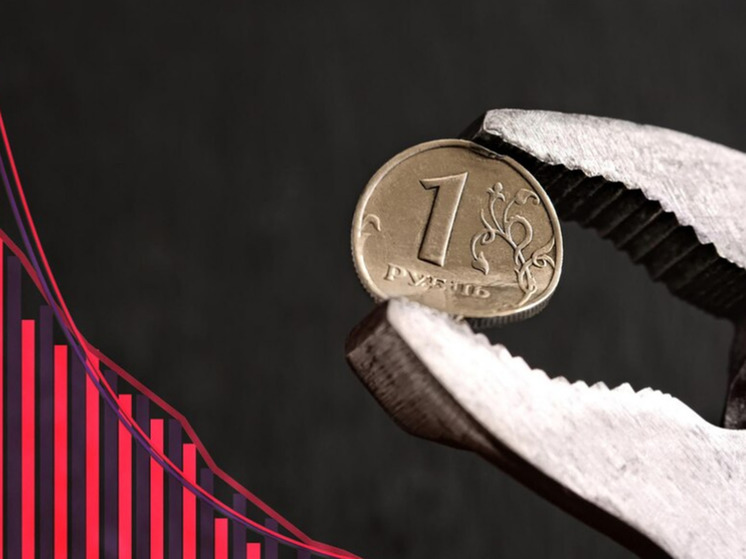
In June, the Ministry of Finance allocated 3.7 billion rubles daily for the purchase of foreign currency and gold, for a total of 71.1 billion. In the period from July 5 to August 6, the amount will be increased to 123.8 billion. According to the press service of the Ministry of Finance, the expected volume additional revenues from the sale of oil and gas will amount to 145.3 billion rubles, while in June this figure was 21.4 billion less than expected. Let us recall that according to the budget rule, if the Ministry of Finance receives excess income from energy exports, then it should be spent on the purchase of foreign currency and gold. The agent for such operations is the Central Bank, which provides the Ministry of Finance with the required amount of funds. The design of the fiscal rule, relevant for 2024, is based on a cut-off price of $60 per barrel of the Russian Urals oil grade.
“Increasing foreign currency purchases means increasing demand. According to the laws of the market, the greater the demand, the higher the price, says Igor Nikolaev, chief researcher at the Institute of Economics of the Russian Academy of Sciences. – The goal is clear – to weaken the ruble, and using market methods. We must not forget: according to the scenario conditions for the development of the Russian economy published back in April, the average annual dollar exchange rate in 2024 should be 94.7 rubles. These conditions form the basis of the new forecast, in accordance with which the budget for the next three years will be adopted. Now the dollar costs 87-88 rubles. Accordingly, by the end of 2024 the rate must reach the psychologically important milestone of 100 per dollar, otherwise we will not see an average annual rate of 94.7.”
Of course, this whole situation is connected with the task of replenishing the budget. It is in deficit today, and as is known, the State Duma recently approved amendments that increase its expenditure by 522 billion rubles, to 37.1 trillion. As a result, the deficit will grow to 2.12 trillion, or 1.1% of GDP, Nikolaev notes. According to the interlocutor of MK, by the beginning of August the rate will cross the mark of 90 for the dollar, and 96 for the euro. And in the fall, the Russian currency will weaken at an even faster pace.
«The operation implemented within the framework of the budget rule is of a purely technical nature,» says Alexey Vedev, Director of the Center for Structural Research at RANEPA. «Since oil prices are currently quite high, increasing the volume of currency and gold purchases will, at a minimum, prevent the ruble from strengthening. But, most likely, the ruble will weaken, which is what the Finance Ministry actually needs. I think that in July-August the exchange rate will be in the corridor of 89-90 per dollar, it will not reach a hundred in the near future. The budget rule was created precisely to use it to adjust the exchange rate in the direction the state needs.»
The actions of the Ministry of Finance have one absolutely logical explanation — the department purchases foreign currency within the framework of the budget rule. In conditions of fairly high oil prices, Russian energy exports bring in more money than expected, argues Alexey Lossan, an expert at the financial marketplace Compare. In July, additional oil and gas revenues will amount to 145.3 billion rubles, which means that in fact (and not according to forecast) the budget will receive 21.5 billion more. This will allow the Ministry of Finance to accumulate certain reserves and at least somehow mitigate the consequences of the West freezing $300 billion of Central Bank assets.
“As for the ruble exchange rate, for it what is happening is a negative factor,” notes Lossan. – In a situation where demand for currency increases, pressure on the ruble will also increase. However, this is countered by two even more powerful circumstances — a reduction in the norm for the mandatory sale of foreign currency earnings and the expected increase in the key rate by the Central Bank at its meeting on July 26. This means that the weakening of the ruble below 90 per dollar is unlikely.”